

An Inspiring Experience in Finding Unity Through Rhythm
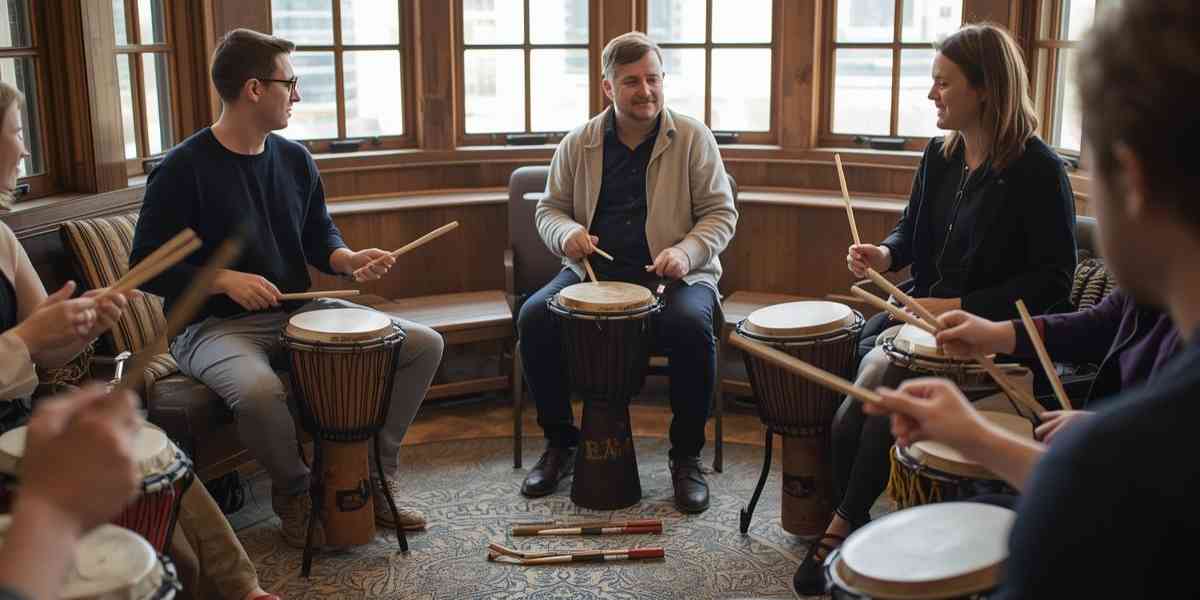
A circle of strangers gathered with drums resting on their knees in the tiny Unity center. What began as a simple curiosity soon became a living lesson in unity—one I’m still carrying with me.
Prompted by a recent drum experience at home, my husband found a local drum circle event and suggested we attend together. We brought one drum from home and borrowed another from the generous collection provided. We didn’t know anyone there. Some attendees were regulars at the Unity center hosting the event, while others—like us—had simply followed the same small advertisement that called us in.
There were about ten of us altogether. Different ages, backgrounds, lifestyles, and beliefs. Yet somehow, we all arrived at the same place, at the same time, holding instruments meant to be played together.
Listening Before Leading
One person began with a steady beat, and the rest of us were invited to join in—adding whatever rhythm felt natural, whatever harmonized with what was already being played.
Within a minute, something remarkable happened.
The sounds blended.
Bongos, conga drums, a frog instrument, wooden sticks clicking together, and deeper drums all found their place. The rhythm wasn’t forced. It wasn’t planned. It simply emerged.
I felt myself relax into the moment, listening as much as playing. Occasionally, I shifted my pattern slightly, curious to see whether I could hold my own rhythm while still staying in harmony with the group. Each time, the sound held together.
It surprised me—in the best way.
I’ve often felt unsure of my sense of rhythm, quietly believing it was a weakness. That night gave me a gentle confidence boost, not through performance, but through participation. I didn’t have to be perfect. I just had to be present.
Community Without Uniformity
Between drum sets, we talked.
The conversations were light. The group was diverse in interests, perspectives, and life experiences, yet there was an ease to the interaction. No one needed to convince anyone else of anything. We met on common ground, connected by sound rather than similarity.
At one point, a regular attendee commented that this was one of the best drum circles she’d experienced. There was something different about this group, she said—a strong spirit, an unusual ability to sync up quickly and naturally.
That observation felt affirming. Unity doesn’t require familiarity. Sometimes it’s born precisely because people arrive without expectations, open and receptive, willing to listen.
One detail stayed with me long after the drums were set down.
The Quiet Strength of Presence
A young woman played for only a short while. Then she stopped, resting her hands, content to simply listen. She remained fully present, attentive, and peaceful—contributing not through sound, but through stillness.
It felt like a reminder that unity doesn’t demand constant output. Sometimes harmony is held not by those who are playing, but by those who are listening deeply. There is room in any sacred circle for different expressions of participation, and each one matters.
When the Mind Takes Over
Sometime in the last 30 minutes, the facilitator suggested an experiment. Drum circles, he explained, are largely intuitive. We feel our way through them. Our cognitive thinking tends to quiet down.
“What if,” he asked, “we add cognition back into the mix?”
He started us on a rhythm tied to the words “ham and cheese,” asking us to play that pattern. Then he quietly gave different people variations—“ham and mac and cheese,” and other similar phrases—until three or four distinct cognitive rhythms were happening at once.
The result?
Chaos.
At first.
The sound became jumbled and disjointed. It took noticeably longer to find harmony than it had when we were simply feeling our way through the music. Each time a new pattern was added, there was another moment of disorder before things gradually settled back into sync.
Eventually, harmony returned—but only after we stopped trying so hard to control it.
A Living Metaphor for Unity
I couldn’t help but see the deeper lesson forming right there in the rhythm.
When we follow the gentle leading of the Spirit—when we listen, respond, and stay open—we tend to find harmony more easily with the people around us. Our rhythms adjust naturally. We make space. We blend.
But when we fixate on our own “ham and cheese” way of doing things—when we get stuck in our heads, convinced there’s only one right pattern—the process becomes harder. The noise increases. Unity takes longer.
Life, much like a drum circle, isn’t meant to be rigidly controlled. It’s meant to be discerned. Felt. Responded to in real time.
Choosing the Rhythm of Spirit
Unity doesn’t require sameness. It asks for attentiveness.
It asks us to listen more than we lead, to trust that there is a larger rhythm at work, and to believe that our unique sound—or even our silence—has a place within it. When we allow God’s Spirit to set the tempo, we’re often surprised by how beautifully different lives can move together.
That night, sitting in a circle with borrowed drums and unfamiliar faces, I was reminded that harmony is less about perfect execution and more about shared willingness.
Sometimes, the most meaningful music is made when we stop thinking so hard—and start listening again.
If this reflection encouraged you, consider sharing it with someone who could use a little more harmony today.
If something in this reflection stirred something in you—if you sense God inviting you into a new season but you’re not quite sure what that looks like—that’s exactly what Flow & Grow sessions are for. They’re gentle, Spirit-led conversations where we create space to listen, notice, and discern together. If you’d like to explore what God may be inviting you into, I’d love to walk alongside you.
Featured Image generated by Canva’s Magic Media